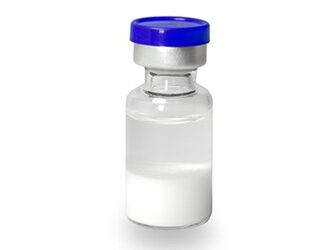
Retatrutide
Size: Multiple sizes | 99% Purity
nM.Wt: 4731.36
nSolubility: H2O
nPurity: >99%
nStorage: -20°C / 3 years
nHalf life: ~6 days
nCAS No.: 2381089-83-2
| Available sizes | 5mg · 10mg |
|---|---|
| Purity (HPLC) | >99% |
| Molecular weight | 4731.36 g/mol |
| CAS number | 2381089-83-2 |
| Synonyms | Retatrutide, LY3437943 |
| Solubility | H2O |
| Storage | '-20°C / 3 years |
| Half-life | ~6 days |
HPLC and MS verified by UKAS-accredited laboratories.
Free on orders over £50. Next-day upgrade available.
COA and batch number on every vial.
Retatrutide (development code LY3437943) is a synthetic peptide agonist acting at three receptors — GIP, GLP-1 and glucagon — and is studied in metabolic research as a single molecule with triple-receptor activity. CAS 2381089-83-2, molecular weight 4,731.36, reported half-life approximately six days.
Full background, mechanism, published research context and analytical notes are on the retatrutide research reference page. The peptide classes studied in this area are summarised in peptides studied in metabolic and weight research.
Presentation
Lyophilised powder, available in multiple sizes — select the size on this listing. GFARMA also stocks a pre-mixed pen presentation; lyophilised powder vs pre-mixed solutions sets out what each format trades away in stability, concentration accuracy and ease of verification.
At 4,731 Da this is a comparatively long peptide, which has a direct consequence for how it is made and what impurities to expect: coupling efficiency compounds across every residue, so longer sequences carry a larger population of deletion products before purification. How research peptides are made explains the arithmetic, and it is also the main reason longer peptides cost disproportionately more — see why peptide prices vary.
Documentation
A Certificate of Analysis is produced per batch and is available on request against the lot number printed on the vial. If you have not worked with this kind of report before, how to read a Certificate of Analysis walks through each section, and identity vs purity explains why the two headline numbers answer different questions.
Handling
Supplied lyophilised. Allow the sealed vial to reach room temperature before opening so atmospheric moisture does not condense onto cold glass, add solvent slowly down the vial wall rather than directly onto the cake, and dissolve without vortexing. Store the dry material at −20 °C, protected from light; aliquot reconstituted stock before freezing so no portion is thawed more than once. Storage and stability covers the degradation routes these steps are guarding against, and molar mass and solution concentration covers the arithmetic — including why the nominal vial weight is not the mass of peptide present. Practical procedure is in the reconstitution guide.
Research use only. Supplied for in-vitro research and laboratory use. Not for human or veterinary use, not a medicine, and not for food or cosmetic application. See the compliance page for the framework GFARMA operates under.
Certificate of Analysis
Reconstitution
For peptides supplied as lyophilised powder, reconstitute in bacteriostatic water or sterile saline at the concentration appropriate to your protocol. Allow the vial to come to room temperature before opening, add solvent slowly down the inside wall (do not directly onto the powder), and gently invert until clear. Do not vortex.
Reconstituted solutions are typically stable at 2–8°C for the durations published in the corresponding peer-reviewed reference. For long-term storage, aliquot and freeze at −20°C; avoid repeated freeze–thaw cycles.
You may also need